Introduction
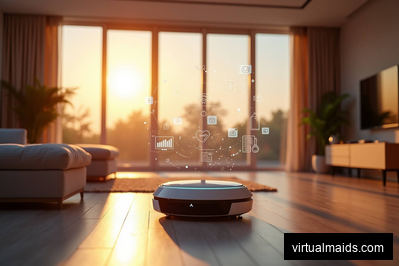
The technological landscape has been radically altered by the advent of domestic robotics. The journey of these robots, from humble vacuum cleaners to sophisticated virtual maids, has been nothing short of remarkable. This article aims to delve into the evolution of such robotics, examining milestones, technological advancements, and the future of this industry.
The first commercially successful domestic robot, the Roomba, was introduced by i Robot in 2002. Since then, the industry has seen a flurry of advancements, with robots now capable of performing a myriad of household tasks. Let's journey through the evolution of the domestic robot.
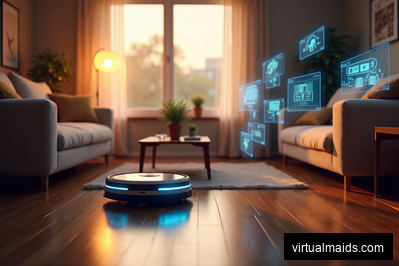
As we delve deeper into the realm of domestic robotics introduced in the previous section, it becomes apparent that these technological marvels are not just changing how we perform household chores but are also revolutionizing the way we interact with our living spaces. For instance, smart home devices integrated with robotic technology can now learn our preferences and habits, adjusting lighting, temperature, and even music choices to create a personalized and seamless living experience. This fusion of cutting-edge robotics with everyday living is transforming our homes into intelligent spaces that cater to our needs and preferences like never before.
The Dawn of Domestic Robotics
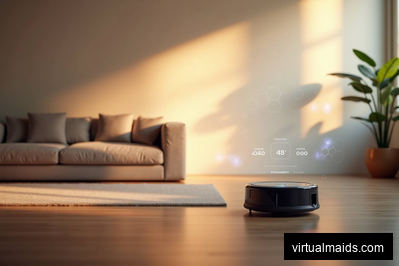
The domestic robotics industry's journey began with simple vacuum cleaners like the Roomba. These devices were designed to automate a single task: cleaning floors. Despite their limited functionality, these robots were revolutionary in bringing automation into homes. Since its inception, the Roomba has sold over 25 million units worldwide, demonstrating the demand for domestic robotics.
Early robots lacked advanced features. For instance, the first Roomba models were unable to map rooms or avoid obstacles effectively. However, they marked the beginning of a new era, paving the way for more advanced domestic robots.
As we step further into the era of domestic robotics, we witness a remarkable expansion beyond mere cleaning tasks. Today, advanced robots like the Amazon Echo and Google Home are revolutionizing how we interact with our living spaces. These smart assistants not only respond to our commands but also learn our preferences, becoming indispensable household companions. The integration of artificial intelligence and machine learning in these devices marks a significant milestone in the evolution of domestic robotics, promising a future where our homes are not just automated but truly intelligent.
The Age of Multi-functionality
As technology advanced, so too did domestic robots. The next generation of robots was able to perform multiple tasks. For instance, the Robomow, introduced in 2014, could mow lawns in addition to cleaning floors. Around the same time, the Winbot, a window-cleaning robot, was released, expanding the robots' cleaning capabilities.
This era also saw the advent of smart home integration. Robots like the Amazon Echo and Google Home, while not traditional robots, brought voice-activated controls and smart home integration to the forefront, paving the way for future domestic robots to integrate into smart home systems.
In the current era of multi-functionality, smart home devices have become indispensable assets in modern households. These devices seamlessly integrate various functions to streamline daily tasks, from smart assistants that control lighting and security systems to multifunctional kitchen appliances that can cook, bake, and even steam. The convergence of technology has led to a new wave of convenience, where a single device can now serve multiple purposes efficiently, saving time and enhancing productivity in our busy lives.
The Arrival of Virtual Maids
Today, we're witnessing the emergence of robots that resemble science fiction's virtual maids. These robots can cook, clean, and even babysit. For example, the Robo Chef, a robot developed by Moley Robotics, can prepare over 100 different meals. Aido, another domestic robot, can play with children, control smart home devices, and even patrol homes for security.
These robots employ advanced technologies, including artificial intelligence (AI), computer vision, and machine learning, to navigate and interact with their surroundings. They also integrate with smart home systems, enhancing their functionality and usability.
As the demand for efficiency and convenience in household management grows, virtual maids are quickly becoming a staple in modern homes. These advanced robots are equipped with AI technology that allows them to not only clean and organize but also learn and adapt to the unique preferences of each household. Imagine coming home to a spotless living room, thanks to your virtual maid's meticulous cleaning routines, tailored specifically to your liking. With features like voice command integration and real-time monitoring through smartphone apps, virtual maids are revolutionizing the way we approach domestic chores.
Future of Domestic Robotics
The future of domestic robotics is promising. As AI and machine learning technologies advance, domestic robots are expected to become more intelligent and capable. Companies like Boston Dynamics and Soft Bank Robotics are already working on humanoid robots that can perform complex tasks and interact with humans in more natural ways.
However, there are challenges that need to be addressed. These include issues related to privacy, safety, and affordability. As domestic robots become more integrated into our lives, it is crucial to ensure they are secure, safe to use, and accessible to everyone.
The future of domestic robotics is not just about automated vacuum cleaners and smart assistants. Imagine having a robot chef in your kitchen, preparing your favorite meals with precision and speed, all while considering your dietary preferences and restrictions. With advancements in robotics and AI, such a scenario may soon become a reality. Additionally, robotic companions for the elderly or individuals with disabilities are being developed to provide both practical assistance and emotional support, revolutionizing the concept of in-home care.
Conclusion
The evolution of domestic robotics is a testament to human ingenuity and technological advancement. From the humble beginnings with vacuum cleaners to the sophisticated virtual maids we see today, this journey has been exciting and transformative.
Looking forward, as technology continues to evolve, so too will domestic robots. With advancements in AI, machine learning, and smart home integration, we can expect to see even more capable and intelligent domestic robots in the near future. The key will be to balance these advancements with considerations for privacy, safety, and affordability to ensure these technologies are accessible and beneficial to all.
In conclusion, the integration of artificial intelligence and machine learning algorithms in domestic robotics has revolutionized the way we interact with technology in our daily lives. From smart home assistants like Alexa and Google Home that can perform tasks and provide information through voice commands, to robotic vacuum cleaners that autonomously clean our floors, the possibilities seem endless. The rapid advancements in this field not only showcase our ability to innovate but also raise important ethical questions about privacy and reliance on technology. As we embrace the future of domestic robotics, it is crucial to consider the implications and ensure that these technologies serve humanity responsibly.